 Bangladesh’s Welfare Mirage
Can the BNP government afford its dream of British-style benefits?
In politics, grand promises win elections. In economics, however, arithmetic eventually wins the argument.
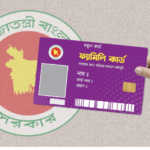
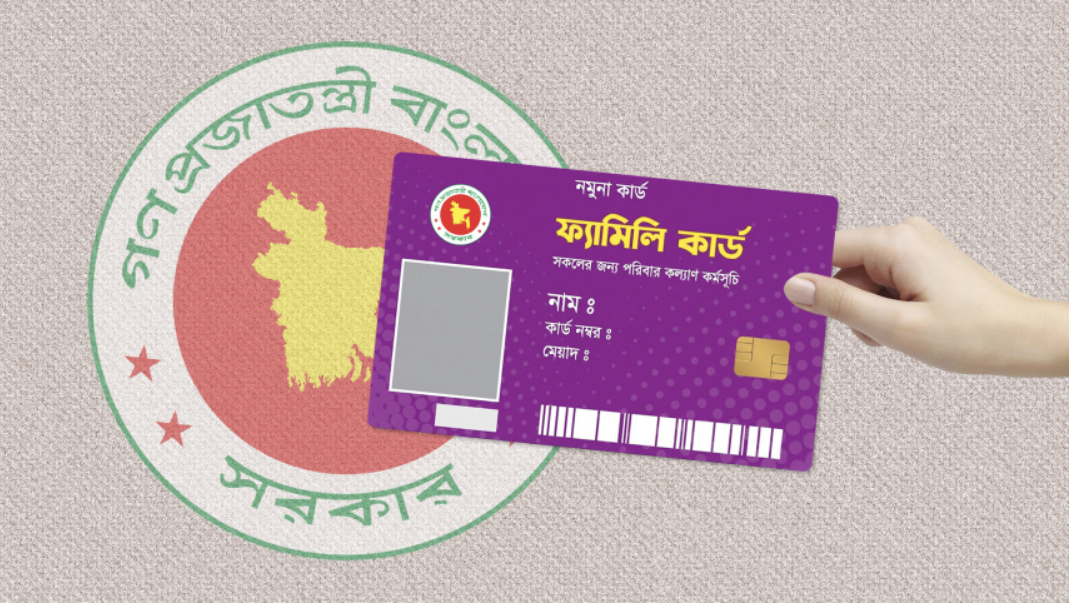
Bangladesh’s new government under Tarique Rahman has moved quickly to launch one of its flagship policies: the “Family Card” welfare programme. The initiative, introduced within weeks of the government taking office after the 2026 Bangladeshi general election, promises direct monthly cash payments to low-income households.
Presented as a bold step toward a “welfare-orientated state”, the programme is politically popular and symbolically powerful. Yet it raises a deeper geopolitical and economic question: can Bangladesh afford such generosity without destabilising its already fragile fiscal structure?
What appears on the surface as compassionate governance may, in reality, be the beginning of a dangerous experiment—an attempt to replicate the welfare culture of rich Western states without the economic foundations that sustain them.
The Promise of Free Money
The newly introduced Family Card programme provides Tk 2,500 per month to selected households, transferred digitally to bank accounts or mobile wallets.
The initiative began with a pilot phase targeting roughly 37,000–40,000 families across several districts, with the government allocating about Tk 38–39 crore for the initial rollout.
The government argues that the programme will support poor households, empower women, and cushion families against rising living costs.
But the real ambition goes far beyond the pilot stage. Prime Minister Tarique Rahman has indicated that the program could eventually expand to cover as many as four crore households across Bangladesh within five years.
If implemented at such a scale, the programme would become one of the largest cash-transfer schemes in the developing world.
At that point, economic concerns start to surface.
The Mathematics of Welfare
At the pilot level, the Family Card programme is manageable. A few tens of thousands of beneficiaries cost the government only a modest amount.
But once expanded nationwide, the numbers become staggering.
If four crore families were to receive Tk 2,500 each month, the annual cost could exceed Tk 1.2 trillion (12 lakh crore taka)—a figure that would rival some of the largest sectors in Bangladesh’s national budget.
Even if the government scales the programme more conservatively, the cost would still run into hundreds of billions of taka every year.
Yet the BNP government has not presented a comprehensive financing strategy.
No major tax reforms have been announced.
No detailed fiscal projections have been published.
No credible explanation has been offered regarding how such a massive recurring expenditure will be sustained.
Instead, the program has been framed primarily as a political promise that is being fulfilled.
Economically speaking, that is a dangerous approach.
The British Welfare Illusion
The intellectual inspiration behind the Family Card scheme appears to be the welfare model commonly associated with Western states—particularly Britain.
The United Kingdom operates an extensive social safety system that includes unemployment benefits, housing support, pensions, child allowances, and healthcare.
But there is a critical difference.
Britain’s welfare state rests on a massive tax base and highly developed institutions built over decades. The government collects a large share of the national income through taxes and social contributions.
Bangladesh, by contrast, operates with one of the lowest tax-to-GDP ratios in the world.
Trying to replicate the welfare architecture of a wealthy European economy in a developing country with limited fiscal capacity is economically hazardous.
It is the policy equivalent of attempting to fly a jumbo jet with the fuel tank of a motorcycle.
Populism Versus Economic Reality
The Family Card programme was not conceived in isolation. The BNP heavily emphasised social protection and income support as a central pillar of its election campaign.
The party presented itself as the architect of a more inclusive economy—one that would redistribute wealth and uplift the poor.
Such rhetoric resonates strongly in a country where millions struggle with inflation, unemployment, and rising living costs.
But populist economic policies often carry hidden costs.
When governments promise benefits without first securing sustainable funding, the result is usually one of three outcomes:
-
Runaway fiscal deficits
-
Rising inflation
-
Growing dependence on foreign borrowing
Each of these outcomes carries serious geopolitical consequences.
The Strategic Risks
The implications of such fiscal expansion go beyond domestic economics.
Bangladesh is strategically situated between South and Southeast Asia, balancing its relations with regional powers like India and China while heavily relying on export markets in Europe and North America.
A deteriorating fiscal position could weaken the country’s bargaining power in several ways.
First, heavy borrowing to finance welfare programs could deepen our dependence on international lenders and foreign creditors.
Second, fiscal instability could undermine investor confidence, particularly in Bangladesh’s crucial export sectors such as garments.
Third, inflation, driven by excessive cash transfers, could erode the purchasing power of ordinary citizens—the very people the program claims to help.
In other words, what begins as a welfare initiative could evolve into a macroeconomic vulnerability.
The Culture of Dependency
Beyond economics lies a deeper social question.
Large, unconditional cash programmes risk creating a political culture in which citizens come to view the state primarily as a dispenser of money rather than an enabler of opportunity.
Healthy economies grow through productivity, investment, and innovation—not permanent dependency on state transfers.
Social safety nets should protect citizens from extreme hardship. But when they become the centrepiece of national economic policy, they risk substituting development with dependency.
That is a path many countries have travelled before—with painful consequences.
A Nation at a Crossroads
Bangladesh stands at a pivotal moment in its modern history.
The political upheavals that culminated in the 2026 election created an opportunity for institutional reform and economic renewal.
Instead, the early signals from the new government suggest a different trajectory: populist redistribution without structural reform.
The Family Card programme may bring short-term relief and political applause. But without a credible fiscal framework, it risks becoming something far more dangerous—a symbol of a government spending money it does not have.
History offers many warnings.
Countries do not become welfare states before they become wealthy.
They become wealthy first.
If Bangladesh attempts to reverse that sequence—building a benefits culture before building the economic engine to sustain it—the result may not be social justice or prosperity.
It may simply be the slow arrival of a fiscal crisis.
And when that day comes, the arithmetic of economics will once again prevail over the promises of politics.